

My Doctor Told Me She Didn’t Think I Would Make It…
July 11, 2026 By Selena Mabry
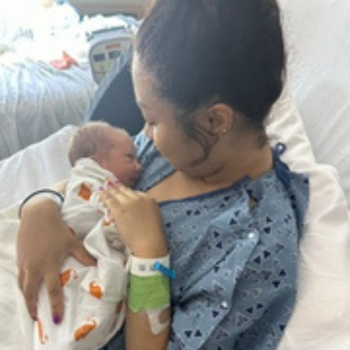
This was my first pregnancy, and I never imagined how quickly everything could change.
At my 16-week prenatal appointment, my blood pressure was in the 150s. That led to my very first trip to the hospital. After hours of monitoring, blood work, and testing, I was thankfully able to go home. My OB recommended that I begin seeing a maternal-fetal medicine (high-risk) specialist every two weeks because they were concerned about my blood pressure.
From that point on, it felt like I lived at doctor’s appointments. Between my OB and high-risk specialist, I had appointments every week for the rest of my pregnancy. At nearly every visit, my blood pressure stayed in the 150s to 160s, which meant frequent trips back to the hospital for monitoring and testing. It was exhausting and emotionally draining, never knowing if each appointment would end with me being admitted.
When I reached my 37-week appointment, my blood pressure was still high at 156/160. My doctor decided it was safest to induce labor that day.
I was started on Pitocin around 12:00 p.m., and by 10:00 p.m., it was finally time to push. During labor, my blood pressure climbed to 172, and things became even more serious. The hospital staff padded my bed because I was at risk of having a seizure, and I was immediately started on a magnesium sulfate drip to help prevent one. I remained on the magnesium for 24 hours after delivery.
After giving birth to my beautiful son, I experienced significant blood loss and became anemic. Instead of going home right away, I stayed in the hospital for three days so my doctors could closely monitor my recovery.
Although delivering my baby was the end of my pregnancy, it wasn’t the end of my journey with preeclampsia. Even today, I still have high blood pressure and take medication to manage it.
Despite everything we went through, I feel incredibly grateful. Thanks to the quick decisions and amazing care from my doctors and nurses, my son is now a healthy, happy, and smart 2-year-old. I share my story because preeclampsia can happen to anyone, even during a first pregnancy, and it can become life-threatening very quickly. If sharing my experience helps even one person recognize the warning signs or seek care sooner, then it’s worth telling.
I didn’t have the most classic of symptoms with my preeclampsia. If I had not been in tune with my body and very cautious medically - m...
ReadMore- Recurring Preeclampsia August 11, 2026
- Laynie’s Birthday August 11, 2026
- My Experience With Post-Partum Pre-Eclampsia August 11, 2026
- I Should Have Advocated More August 11, 2026
- Just Another Day. August 11, 2026
- Listen To You Body August 11, 2026
- Twenty-Five Weeks Changed Everything August 11, 2026
- Pppe, Hellp & DIC August 11, 2026
- Elise’s Story August 11, 2026
- 35 Weeks July 11, 2026