

Needed: Minority representation in research
 It was normal for her pressures to have risen slightly in her second trimester, a midwife from the Alaska Indian Health Facility assured her patient Laura M. in 1998. The gain of 20 pounds in two weeks was probably dehydration, maybe a bit of carelessness with her diet. Laura’s provider never mentioned that Laura’s Native American ethnicity could be a risk factor for preeclampsia, or that obesity and a family history of both hypertension and diabetes might put Laura at higher risk for preeclampsia.
It's possible that her care provider didn't even know.
Medical research related to pregnancy complications has not always included enough non-white participants for those study populations to look like the population of pregnant women. This is like drawing mostly one suit from a deck of cards – your hand doesn't look like the deck, making it hard to predict how things could play out. When minority populations aren't represented, research can't give doctors any warning about unique risks to minorities. The lack of data also means no one knows if a different approach could improve care and outcomes.
Sometimes this gap means additional risk is overlooked. While all pregnant women are at risk and should know the signs and symptoms of preeclampsia, and when to seek medical attention, we know now that American Indians/Alaska Natives have twice the normal rate of preeclampsia, and are also more likely to enter pregnancy with underlying conditions like obesity and diabetes that can make preeclampsia more likely to occur.
Long-term health issues that can be revealed by pregnancy, like autoimmune diseases and chronic hypertension, also affect women from racial and ethnic minorities differently. But in 1998 this was not understood, largely because there was little research on the outcomes of a sample of Alaska Natives. No one looked at Laura's risk factors in early pregnancy and suggested she needed closer monitoring for the preeclampsia with severe features that she went on to develop at 35 weeks gestation.
To fix this persistent gap, research studies must enroll racial and ethnic minorities at high rates – so that the populations included in the studies will finally begin to look like the real world. If differences are found that will affect pregnancy management and lifetime disease trajectories, the Preeclampsia Foundation will support the creation of new guidelines and the popularization of that information – just as it has for cardiac health.
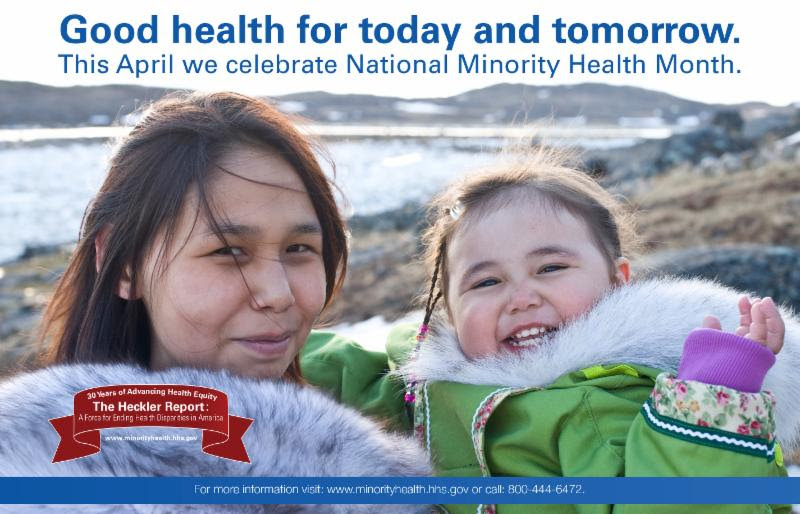
April – National Minority Health Month –spotlights the US Department of Health & Human Services plan "to reduce racial and ethnic health disparities." A big part of that plan? "To increase the availability and quality of data collected and reported on racial and ethnic minority populations."
Preeclampsia Foundation volunteers can support this effort. As the leading provider and advocate of research and education into preeclampsia and HELLP syndrome, the Preeclampsia Foundation has built The Preeclampsia Registry, a database of survivors' genetic data and family and medical histories.
Using The Preeclampsia Registry allows researchers to easily identify a population eager to volunteer for research into preeclampsia. This makes it easier and more cost effective for researchers to work on preeclampsia in general – a major goal of the Preeclampsia Foundation.
It will also allow researchers to recruit women with minority status into studies examining risk and possible therapies for preeclampsia. Minority women, and their families, who enroll in The Preeclampsia Registry will be supporting this initiative to improve the representation of minorities in medical research, saving the lives of mothers and babies.
The Indian Health Facility has overhauled its management guidelines for hypertensive pregnancy in response to newer data. "If they’d implemented this earlier, my experience would have likely been entirely different," says Laura.
While her daughters can expect better management, Laura hopes future research into modifiable risk factors in the Alaska Native population might help even more. As more minorities enroll into The Preeclampsia Registry, that research becomes more likely.
For more information about The Preeclampsia Registry visit www.preeclampsia.registry.org.
Related Articles

Your story is needed to improve outcomes for moms like you. Add your voice to critical preeclampsia research to ensure that every story is heard.


Frequently asked questions about the Preeclampsia Registry, a patient-driven registry and biobank.

The Preeclampsia Foundation offers research funding, study recruitment, and other patient engagement services to researchers.

We provide research grant funding to advance progress towards detection, prevention, or treatment of preeclampsia, HELLP syndrome, and other hypertensive disorders of pregnancy.
1785353792.png)
Preeclampsia is a serious complication of pregnancy that can affect a woman’s health beyond pregnancy. For a long time, it has been clear that women who experience preeclampsia have a greater ch...
1785337209.png)
Black women in the United States experience preeclampsia more often and are more likely to experience severe complications from it than White women. Traditional risk factors, such as high blood pressu...
1785336951.png)
High blood pressure disorders during pregnancy, including preeclampsia and gestational hypertension, are common complications that affect approximately 5–10% of pregnancies. Although these condi...
1785336695.png)
Preeclampsia is a serious pregnancy complication that causes high blood pressure and can harm organs like the kidneys, liver, and brain. It affects thousands of pregnancies every year and remains one...

Hypertensive disorders of pregnancy, such as high blood pressure during pregnancy, are a major cause of illness and death for mothers. It is important to find women who are at risk as early as possibl...