


Last Updated on August 08, 2025
What is HELLP Syndrome?
HELLP (Hemolysis, Elevated Liver enzymes and Low Platelets) syndrome is a life-threatening pregnancy complication usually considered to be a variant of preeclampsia. Both conditions usually occur during the later stages of pregnancy, or soon after childbirth.
HELLP syndrome was named by Dr. Louis Weinstein in 1982 after its characteristics:
- H (hemolysis, which is the breaking down of red blood cells)
- EL (elevated liver enzymes)
- LP (low platelet count)
HELLP syndrome can be difficult to diagnose, because all of the typical signs of preeclampsia may not be apparent, such as high blood pressure and protein in the urine. Its symptoms are sometimes mistaken for gastritis, flu, acute hepatitis, acute fatty liver disease, gall bladder disease, or other conditions. While some of these conditions may also be present, there is no evidence they are related.
Early diagnosis is critical because serious illness and even death can occur in about 25% of cases. As a result, patient awareness of HELLP syndrome, and how it relates to preeclampsia, is helpful to ensure the best medical care for mother and baby.
What are the symptoms of HELLP syndrome?
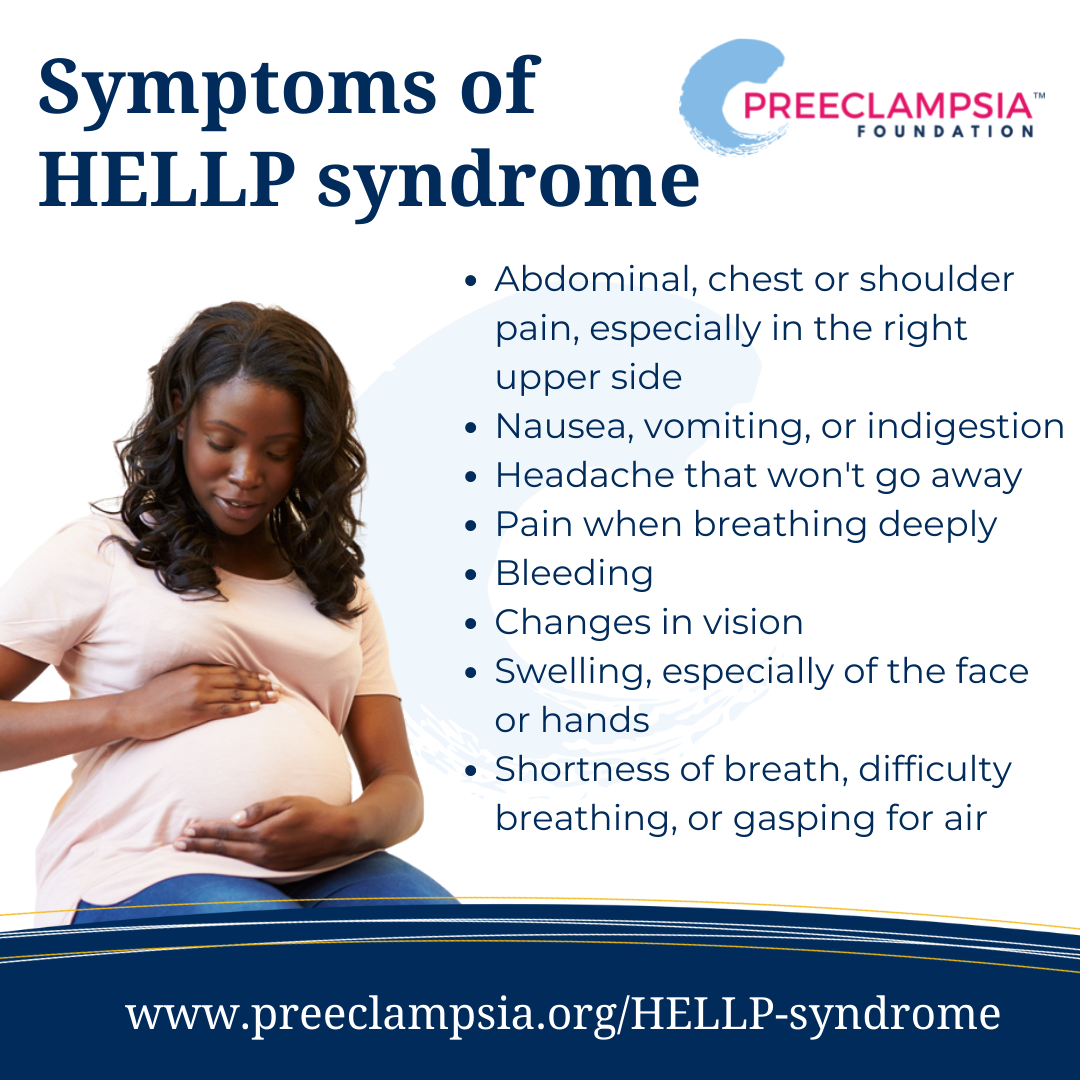
The physical symptoms of HELLP syndrome may seem at first like preeclampsia and include one or more of the following symptoms:- Epigastric (abdominal) or substernal (chest) pain, including abdominal or chest tenderness and upper right side pain (from liver distention)
- Nausea, vomiting, or indigestion with pain after eating
- Headache that won't go away, even after taking medication such as acetaminophen
- Shoulder pain or pain when breathing deeply
- Bleeding
- Changes in vision including blurred vision, seeing double, or flashing lights or auras
- Swelling, especially of the face or hands
- Shortness of breath, difficult breathing, or gasping for air
Signs (which are measurable) to look for include:
- High blood pressure
- Protein in the urine
- Abnormalities in laboratory blood work (increased liver enzymes, decreased platelets, and the presence of hemolysis)
The most common reasons for mothers to become critically ill or die from HELLP syndrome are liver rupture or stroke (cerebral edema or cerebral hemorrhage). These can most often be prevented when caught in time. If you or someone you know has any of these symptoms of HELLP syndrome, please see a healthcare provider immediately.
How common is HELLP syndrome?
Among pregnant women in the United States, 5 to 8% develop preeclampsia; 15% of these develop HELLP syndrome. This mean approximately 45,000 women per year will develop HELLP syndrome in the United States. There is some difference in opinion among experts as to what lab values should be used to diagnose HELLP syndrome, so these estimates are approximate.
Who is at risk of getting HELLP syndrome?
Patients who have preeclampsia or eclampsia are at higher risk of developing HELLP syndrome. However, it is important to note that not all HELLP syndrome patients exhibit the classic signs (high blood pressure and protein in the urine) that typically characterizes the diagnosis of preeclampsia. It can occur more often in patients with a family history of preeclampsia or HELLP syndrome, or a history of certain autoimmune conditions or clotting disorders, as well as in patients with no risk factors. (Please see our FAQs for a full list of risk factors for preeclampsia.)
How is HELLP syndrome classified?
HELLP syndrome is classified according to the severity of certain blood test values which reflect the condition of the mother’s blood vessels, liver and other organ systems. The lower the class, the more dangerous the situation.
- Class I (severe thrombocytopenia): AST ≥ 70 IU/L, LDH ≥ 600 IU/L, platelets ≤ 50,000/uL
- Class II (moderate thrombocytopenia): AST ≥ 70 IU/L, LDH ≥ 600 IU/L, platelets > 50,000 ≤ 100,000/uL
- Class III (mild thrombocytopenia): AST ≥ 40 IU/L, LDH > 600 IU/L, platelets > 100,000 ≤ 150,000/uL
AST (aspartate aminotransferase) is an enzyme that your liver makes, which is usually in very low quantities. High quantities can indicate damage to your liver.
LDH (lactate dehydrogenase) is an enzyme involved in energy production that is found in almost every cell and organ of your body, including your liver and kidneys. LDH is released from the cells into your bloodstream when cells are damaged or destroyed. Higher LDH levels in blood may be a sign of tissue damage or disease.
Platelets (also known as thrombocytes) are colorless blood cells that help blood clot and stop bleeding by clumping and forming plugs in blood vessel injuries. Thrombocytopenia is a condition in which you have a low blood platelet count and is one of the defining characteristics of HELLP syndrome.
How is HELLP syndrome treated?
Most often, the definitive treatment for women with HELLP syndrome is the delivery of their baby and the placenta. During pregnancy, many women suffering from HELLP syndrome require a transfusion of some form of blood product (red cells, platelets, plasma). Corticosteroids can be used to improve fetal lung development in the very preterm pregnancy; some care providers have reported beneficial maternal effects to slow disease progression, lessen negative impact on the liver and central nervous system, and shorten hospitalization.
If HELLP syndrome is diagnosed early and the baby is delivered, the mother generally will have better outcomes. If the diagnosis is delayed or it was managed too conservatively, a woman's likelihood of developing HELLP syndrome and having poor outcomes is higher.
What can I do to prevent HELLP syndrome?
Unfortunately, there's currently no way to prevent this illness. The best thing to do is:
- Get yourself in the good physical shape before getting pregnant
- Have regular prenatal visits during pregnancy
- Inform your care providers about any previous high-risk pregnancies or family history of HELLP syndrome, preeclampsia, or other hypertensive disorders
- Understand the warning signs and do not delay reporting them to your healthcare provider, including trusting yourself when "something just doesn't feel right"
- Talk to your provider about aspirin. Aspirin has been shown to reduce risk of preeclampsia, which in turn may reduce risk of developing HELLP syndrome
How does HELLP syndrome affect my baby?
The effects of HELLP syndrome on your baby can vary depending on your baby's gestational age, his/her weight at delivery, and any complications that may arise from their early delivery. If a baby weights over 1000 grams (at least 2 pounds) at birth, his or her survival rate and length of hospital stay is similar to non-HELLP babies of comparable size. There do not seem to be too many long-term adverse outcomes.
If the baby weighs less than 1000 grams (less than 2 pounds) at birth, the news is not as good. Severe studies have suggested that these babies require longer hospital stays and more chance of needing ventilator care. Unfortunately, right now health care providers cannot predict the scope of medical problems these babies may encounter at birth and later in life due to their premature delivery.
If a baby weighs at least 2 pounds (over 1000 grams) at birth, he or she has the same survival rate and health outcome of non-HELLP babies of the same size.
In developed countries, the stillbirth rate with HELLP syndrome (in utero death of the baby after 20 weeks) is 51 out of every 1,000 pregnancies (this is 5.1% so think of it as about 1 in 20 pregnancies), which is higher than rates among patients with severe preeclampsia and eclampsia. Overall, infant death from HELLP syndrome (both stillbirth and infant loss following delivery) ranges from 7.7 to 60%. Most of these deaths are attributed to complications from HELLP syndrome, including the abruption of the placenta (placenta prematurely separating from the uterus), placental failure with intrauterine asphyxia (fetus not getting enough oxygen), and extreme prematurity.
Will I get HELLP syndrome again in a future pregnancy?
Women with a history of HELLP syndrome are at increased risk of all forms of preeclampsia in subsequent pregnancies. The rate of preeclampsia in subsequent pregnancies ranges from 16 to 52%, with higher rates if the onset of HELLP syndrome was in the second trimester or if the patient has chronic hypertension. The rate of recurrent HELLP syndrome ranges from 2 to 19% depending upon the patient population studied. Read more about some ways that you can prepare for your next pregnancy.


We didn't think we were going to be parents. After six years of hoping and four years of waiting to adopt, we got a...
ReadMoreRelated Articles

Ánimo y cuídate: la preeclampsia puede estar asociada con enfermedades cardíacas y accidentes cerebrovasculares más adelante en la vida Descargue nuestra hoja informativa

Eclampsia is a very serious complication of preeclampsia characterized by one or more seizures during pregnancy or in the postpartum period.

La preeclampsia, en todas sus formas, puede requerir muchos análisis, tanto durante como después del embarazo. ¿Alguna vez se preguntó por qué el proveedor de atención médica le solicita tantos anális...

El embarazo es un momento ideal para familiarizarse con su presión arterial. Aquí encontrará todo lo que necesita saber sobre cómo tomarse la presión arterial en casa.

Melbourne, FL – October 7, 2025 – The Preeclampsia Foundation launched two new educational resources to help expectant moms and their providers better understand the growing field of predi...

Melbourne, FL – September 17 , 2024 – The Preeclampsia Foundation, in partnership with the International Society for the Study of Hypertension in Pregnancy (ISSHP) and Society for Ma...

Resultados de varios estudios apoyan la hipótesis de que el estrés causado por un embarazo y parto traumáticos puede en muchas ocasiones anular la habilidad de salir adelante emoc...

Is there a connection between maternal diet and preeclampsia? The PRECISE Network research team and I recently completed an evidence review to compile information on maternal nutritional factors that...

What you’ll learn in this article: Many risk factors contribute to an individual’s chance of getting preeclampsia. These risk factors may be genetic, physical, environmental, and even s...