
It's Me. It's Christian. I'm In Here.
May 16, 2026 By Christian Headden
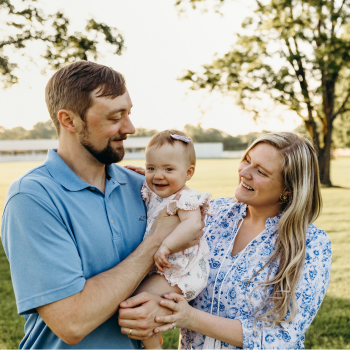
This is my preeclampsia story. And it is a hard one. But it is mine.
THE "NORMAL " PART
I found out I was pregnant on November 28, 2021. Lucy Lou was our first baby. I was excited and terrified.
At first, everything felt normal. Exciting. Surreal. I was sick almost immediately, but everyone told me that was normal. Pregnancy is miserable, they said. Your body changes. You swell. You get headaches. You get tired.
So when things started happening to me, I normalized them too. Because I had been given a script, and I followed it.
Then, around 19 weeks, I started noticing the “pregnancy nose.” My face was swelling and looked different in photos. Fuller. Rounder. That’s when I started making comments to Britt about looking like Princess Fiona from Shrek. I kind of just laughed it off. Then my wedding rings stopped fitting.
But every symptom had an explanation. Swelling? Normal. Headaches? Normal. Exhaustion that felt nothing like tired, but more like being slowly hollowed out from the inside? Normal. Visual changes, floaters, flashing lights at the edges of my vision? Normal. The same brutal headache returning to the exact same location, no matter what medication they tried? Probably a migraine. Probably stress. Probably normal.
I heard "normal pregnancy symptoms" so many times that I started saying it to myself. I started gaslighting myself before anyone else even had to.
I stopped bringing things up at appointments. I didn't want to be dramatic, annoying, or “that patient.” I didn't want to waste anyone's time just to be told the same thing again.
That is one of the cruelest things about preeclampsia. So many of its warning signs are identical to what women are taught to expect from pregnancy. The disease hides inside the noise of normal pregnancy misery. And when the people who are supposed to catch it keep sending you home, you start to believe them.
I believed them for a long time.
THE PART WHERE MY BODY TRIED TO TELL ME
At around 26 weeks, the all-over swelling was getting noticed by family. My grandmother commented the swelling. And, because I had been so well trained by the doctor on gaslighting. I began trying to convince her, and myself it was just the heat…and again, “normal.” After that, I began wearing compression socks constantly. Elevating my feet.
I remember looking at myself in photos from that period and not recognizing my face. The puffiness. The heaviness. The way my features had softened into something unfamiliar.
I said to my husband, Britt: It's me. It's Christian. I'm in here.
Around the same time, I had developed the persistent headache. Not just a regular shmegular headache. The same headache, always the same location, always the same level of pain. It would almost go away and then come back. My OB gave me something for it. It didn't work. So she sent me to my primary care doctor, who prescribed a narcotic. That didn't work either and only made me sick to my stomach.
It’s important to note that at this point, two doctors had knowledge of their patient presenting with one of the most classic, textbook symptoms of preeclampsia: a dull or severe, throbbing headache, at or after 20 weeks of pregnancy, often described as migraine-like, that just won’t go away.
I was not catastrophizing. I was being catastrophically undertreated and ignored.
THE BREAKING POINT
Around 27 weeks, my feet were swelling so badly that I was already two and a half sizes up in shoes and still couldn't get them on. They were those two, thick-strapped, Birkenstock knock-offs.
I finally sent a message to my OB about my swelling with a free foot photo attached.
My feet are wildly swollen. I’m wearing shoes that are two and a half sizes larger, and I can’t get them on.
I was at my absolute limit. And I want to be honest: even in that moment, even knowing in my body that something was deeply wrong, there was still a voice in my head asking if I was overreacting.
I was not overreacting.
At a company event, my coworker's mother, a retired nurse, happened to see me and asked if she could take my blood pressure. It was dangerously high. She saved me. She saved Lucy.
Everything moved fast after that.
THE PART THAT STILL SCARES ME TO WRITE
I was admitted to [to the hospital] on May 19, 2022. Twenty-eight weeks pregnant with a 202/118 blood pressure. The diagnosis was severe, early-onset preeclampsia.
I had severe edema (the ogre-like swelling) throughout my entire body. Protein was spilling into my urine at levels that meant my kidneys were in crisis. I had hyperreflexia. Neurologic symptoms. My body was not managing the pregnancy anymore. The pregnancy was consuming my body.
I remember my nurse leaning close to me shortly after arriving and saying quietly: Christian, you're about to be very popular. I'm telling you this because it is imperative that you remain as calm as possible.
Then everyone flooded in. Doctors. Nurses. Monitors. Medication. Questions.
I was started on the “mag drip” to prevent seizures. They monitored my reflexes, my breathing, my urine output, my neurologic status around the clock.
The blood pressure cuff went off every ten minutes. I dreaded the small melody it made after every reading. That cheerful little sound that always preceded a number that was too high. I started to hate that melody in a specific, visceral way I have not forgotten. On the night between May 21 and May 22, I started feeling like I couldn’t breathe. It had started subtly. A feeling like I couldn't fully fill my lungs. I thought the room was dry. I thought it would pass. It didn't pass. It got worse over hours. The only way I can describe it is this: it felt like the smallest possible sensation of drowning. Not violent. Not sudden. Eventually, I told the nurses. That’s when they realized they were not equipped to handle a baby as premature as Lucy would be.
I was transferred by ambulance to [another hospital].
I remember being in the ambulance and, for the first time, truly thinking: “This might be it.”
It was only a fleeting thought that I pushed down immediately. I knew I had to stay calm. But I had thought it. And I knew it was true.
THE PART I DON'T REMEMBER WELL
The team at [the hospital] moved quickly. They were more direct and urgent because my body was not stabilizing. The only cure was delivery. They confirmed that fluid was filling my lungs, and the decision had been made. Emergency c-section.
I remember lying in the bed before they took me to the OR. Britt was beside me. I looked at him and thought about his life without me in it. I thought about him raising Lucy alone. I thought about everyone and the moments I loved.
I opened my mouth to tell him that I thought I might die. I stopped myself. If I said it out loud, it would throw me into a panicked spiral of crying and further raise my blood pressure. So instead I stayed calm, or tried to, and I told him I loved him before they wheeled my bed away.
I remember being on the operating table and fighting sleep. I genuinely knew that there was a risk of not waking up if I let myself go under. My brain had spent weeks in survival mode, and it had decided that stopping meant dying.
Then Lucy Lou was born on May 23, 2022. Twenty-nine weeks and two days. Two pounds, six ounces and a third.
Lucy was out. She was alive. I had seen her. And the constricting feeling I’ve had for weeks finally released.
I asked Britt first, and then the anesthesiologist, if I could go to sleep. They gave me permission. I gave myself permission. I said thank you and told Britt, “I love you.”
I remember thinking: My body did everything it could.
And then I let go.
I want to be clear. I was not choosing to die. I was not giving up. I was a woman who had been in survival mode for weeks, completely depleted, who finally had permission to rest. But I also want to be honest about what that moment actually was, because pretending it was just tiredness would not be the truth. I was so tired. I was so scared. And what I felt was less like peace and more like the total absence of the ability to keep fighting.
This realization still breaks my heart. Lucy was immediately taken to the NICU. I didn't see her until 12 hours later that afternoon. Britt took the first photos of her because I could not get there. I don't remember that morning at all.
THE PART NOBODY TALKS ABOUT
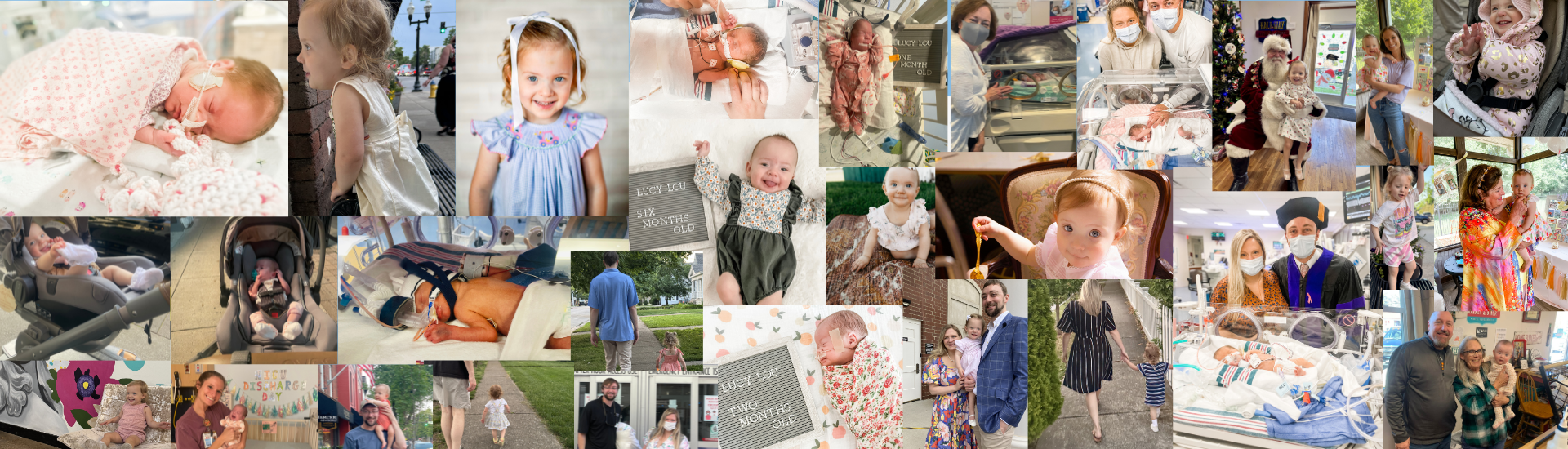
Lucy spent 87 days in the NICU.
And this is the part I need to say plainly, because I think it might be the most important thing in this entire piece.
I did not bond with my daughter right away. I disappeared into survival mode.
I loved her. I know that now. But I was terrified to love her fully, because loving her fully meant there was something to lose. And I had spent too much time preparing to lose everything.
I had spent weeks believing we both might die. Then, suddenly, everyone expected me to become a mother…overnight. I couldn’t do it. I was scared and angry.
The first two weeks were terrifying. It seemed like every day there was another new complication. She was so fragile. Connected to so many machines. I could not let myself love this baby who could still be taken from me. It was stressed to us that we take this hour-by hour. Because these situations are so fluid.
I felt like a horrible person. I felt like a horrible mother. No. I didn't even feel like a mother at all.
I felt like an imposter with all the wrong feelings. Who must have done all the wrong things. Who had a body that couldn't do the one thing it was supposed to do. I couldn't protect her while she was inside me. How was I supposed to protect her now.
The first time Britt wheeled me down to the NICU, I remember telling myself: okay. You have to act like a mother. Be emotional. Ask motherly questions. You don't want to look like a terrible person in front of your husband and nurses.
Everything I said and did was performative. It was not real. I was going through the motions of what I thought a mother was supposed to look like, because internally, I was still in crisis. Still numb. Still somewhere far away from the room I was sitting in.
I can look back on those NICU photos and videos and see how blank and disassociated I was. I thought that made me a terrible person for a long time. I know now it made me a traumatized one. I was also furious in a way I didn't know how to hold.
I was furious hearing other babies cry down the hallway. Furious watching other parents shuffle past my room with car seats and bags and balloons, heading home. I longed for the ordinary chaos of that. The struggle of getting a baby and all her gear to the car. I would have given anything for that normal, tired, overwhelming moment.
I hated seeing congratulations in my social media comments. I hated when people said, "at least she made it." That phrase made me see red. Because I was still in the loss. I was still grieving my pregnancy, my birth, my body, my postpartum, my bonding, my sense of safety. Everyone else had already fast-forwarded to gratitude about something I was not guaranteed yet. Something I could lose at any given moment. That’s like congratulating someone on graduating from school in the middle of February…and they’re failing all their classes.
THE PART ABOUT BRITT
I have to say something about my husband.
He fell in love with Lucy immediately. He was optimistic the whole time…annoyingly optimistic. I believe, with my whole heart, that God put Britt here to be a father. While I was scared and guarded and performing motherhood from a distance, he was already all in.
He will tell you, to this day, that he knew God had us. We had our entire church, family, and half of Franklin praying for us.
I remember sitting with Lucy on one of the first days and thinking maybe we would come every other day. And Britt said: No. We're coming every day.
I felt guilty that I didn't want to come every day. That I wanted to go somewhere that wasn't painful and scary and full of machines keeping my daughter alive. But we went every day. Because of him.
I really think he was always more ready to be a dad than I was to be a mom. And I think a lot of that was just the selfishness that comes with not having kids yet. The world revolved around me. Looking back on that now makes me laugh a little. Because now it is Lucy first. Without question. Without hesitation. And I wouldn't have it any other way.
Oh, how much motherhood changes you.
WHAT I KNOW NOW
It took me quite some time to fall in love with my daughter. And then I fell completely and fully. Now she is my absolute everything. When I look at her, I am still sometimes overwhelmed. Not by grief anymore, but by gratitude so big it has nowhere to go.
Lucy quickly graduated from her developmental therapy sessions. Her PDA closure surgery went beautifully. She is caught up. She is healthy. She is perfect. She is four years old, runs laps around us, has loud opinions about everything, and fills every single room she walks into. Looking at her today, you would never know what she has endured.
And I, somehow, am still here too. But better.
WHAT I NEED YOU TO KNOW
Here is what I wish I had known when I was pregnant.
Preeclampsia is the leading cause of maternal and infant mortality worldwide. It affects 5-8% of all pregnancies. It has no cure except delivery. And its symptoms, especially early on, overlap almost entirely with what women are routinely told to expect from a normal pregnancy.
Women are dismissed. Women are told they are overreacting. Women learn to doubt their own bodies. Women gaslight themselves because their doctors have been gaslighting them for months. And sometimes those women end up in ambulances with fluid in their lungs at 28 weeks.
Know the warning signs. A severe or persistent headache, especially in the second half of pregnancy. Visual disturbances, floaters, blurred vision, flashing lights. Sudden or severe swelling in your face and hands. Upper right abdominal pain. Rapid weight gain from fluid. Shortness of breath. Blood pressure above 140/90.
If something feels wrong, say it. Say it again. Be the difficult patient. Be the one who calls twice. I spent months talking myself out of my own symptoms because I had been taught that being a bother was worse than being sick. I was wrong about that. I will never be wrong about it again.
And if you are already in it, already on the other side of a NICU stay or a traumatic birth or a postpartum you do not recognize yourself inside of, I want you to hear this: It is not your responsibility to censor your story to make other people feel more comfortable. It is okay not to be okay. The wrong feelings are still your feelings, and they are valid, and they do not make you a bad mother. Give yourself some grace. An enormous, unreasonable, unconditional amount of it.
And in the future, if you or someone you know is experiencing preeclampsia, severe pregnancy complications, or a NICU stay, please reach out to me. Truly. I mean that. I know how isolating and surreal this experience can feel, and I know how desperately I searched for someone who understood while I was inside it. One of the resources that helped me feel less alone was Dear NICU Mama. Their stories helped me feel seen during one of the most isolating seasons of my life. If sharing my story can make someone else feel less alone, too, then every hard part of telling it is worth it.
Love, Christian
This is my preeclampsia story. And it is a hard one. But it is mine.
ReadMore