
My Pregnancy Journey: the Critical Importance Of Patient Advocacy
November 23, 2026 By Samantha Kunstadt
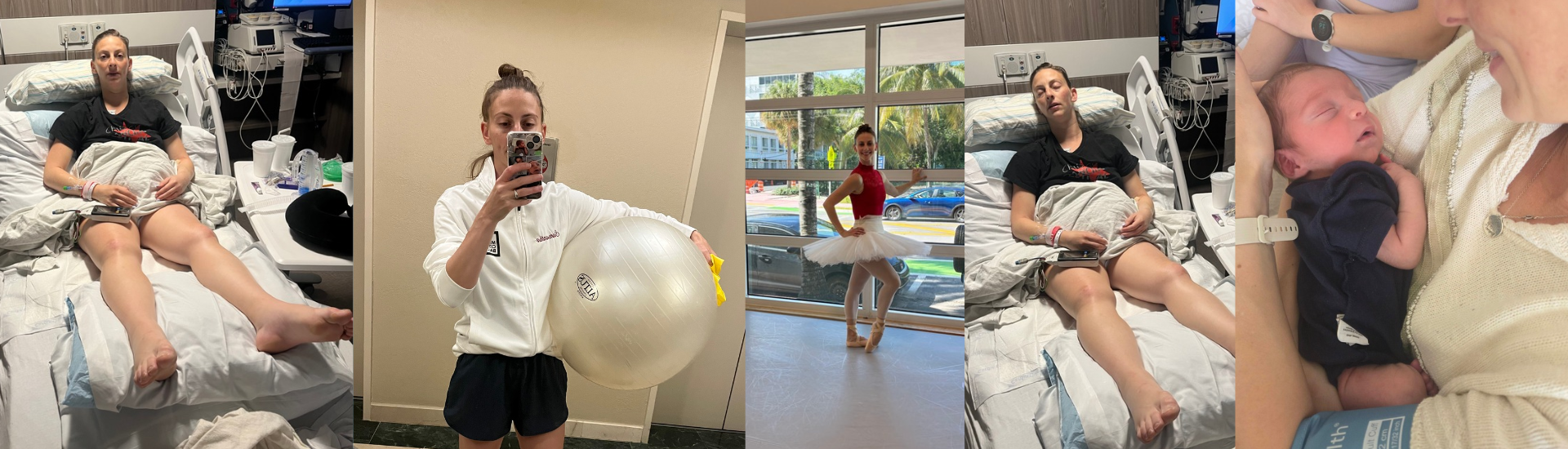
My pregnancy journey began in August 2025, when my husband and I pursued IUI after three years of infertility. Today, we have a healthy, thriving baby boy named Walden, born this past April. While I am incredibly grateful for this outcome, the traumatic path to bringing him into the world left me deeply shaken. What should have been an exciting chapter became an experience where I felt unheard, confused, and endangered by fragmented communication among my OB-GYN team, Maternal-Fetal Medicine (MFM) specialists, and hospital staff.
As a principal ballet dancer for over 20 years, I approached pregnancy with curiosity and deep trust in my body. However, I quickly learned how much burden fell on me to navigate my own care. Despite being 35 and requiring extra monitoring, my appointments were stressful. My OB-GYN was chronically double-booked, leaving me with rushed 10-minute windows where I struggled to ask questions before being hurried out.
The situation escalated when I was diagnosed with gestational diabetes. By February, my historically low blood pressure began rising. I was told to monitor it at home, but providers gave me conflicting thresholds for when to seek help, leaving me uncertain about how to make safe medical decisions.
During my 37th week, after being repeatedly reassured not to worry, I went in for a routine ultrasound. My blood pressure had spiked to the 150s/100s. Without a physician consultation or explanation of what these numbers meant, I was abruptly ordered to go to the hospital for an immediate induction. I had to demand a phone call with the MFM physician just to understand the risks.
The breakdown in communication grew worse at the hospital. A few hours after induction, my water broke. The next day, my on-call OB-GYN arrived completely unaware of this milestone, stating they were planning to break my water for me. Chart reviews were visibly neglected. Over the next few days, despite claiming they would limit exams to prevent infection, providers performed them continuously. By the third day, my legs swelled severely, and I was placed on a magnesium drip and confined to bed. Despite experiencing vision changes and a blinding headache, nobody explicitly discussed preeclampsia with me. After enduring an improperly placed epidural that required painful readjustment, I developed a fever—another critical change that my OB-GYN was shockingly unaware of.
My husband and I realized we were on our own, forced to advocate fiercely while sicker than ever. Trusting my instincts on the third night, I called the entire care team into the room and stated, "I want a C-section. I am getting sicker, and the baby is too."
An hour later, anesthesiology revealed that my surgery was delayed because my sodium levels had plummeted from 129 to a critical 121. Prior to admission, I explicitly requested saline instead of Lactated Ringer’s (LR) solution. We reminded staff at every shift change, yet they ignored our instructions and continuously administered LR, citing "hospital protocol." This negligence directly triggered severe hyponatremia, delaying surgery by another agonizing day.
The next morning, with my baby's heart rate dropping and my OB-GYN saying, "Now you're really sick." I remember wondering how we had reached a life-threatening crisis without a single proactive conversation about my worsening condition.
I understand that birth plans must change, but a patient's safety should never be compromised by a failure to listen. I share my story with the Preeclampsia Foundation so that other mothers are empowered to speak up, and to remind providers that listening to a patient is just as vital as reading their charts. Advocacy saved my life, but it shouldn't be a patient's only line of defense.
We didn't think we were going to be parents. After six years of hoping and four years of waiting to adopt, we got a...
ReadMore- Intersection Of Postpartum Mental Health, High Blood Pressure, and Neurological Complications November 23, 2026
- Shayla's Story November 23, 2026
- Our Preeclampsia and Hellp Syndrome Story November 23, 2026
- I Almost Ignored the Warning Signs: My Postpartum Preeclampsia Story October 29, 2026
- Shelby’s Story – A Mother Lost Just 10 Days After Giving Birth October 28, 2026
- My First Battle With Preeclampsia October 28, 2026
- Divine Protection October 28, 2026
- My Baby Who I Named After My Dad October 28, 2026
- Hellp Postpartum October 28, 2026
- The World's Slowest Marathon October 15, 2026