

Three Years Later, and My Mind Will Never Forget
November 28, 2026 By Jasmine K
When I became pregnant with my first child, I started at a healthy weight and believed I had no major risk factors for preeclampsia. My first trimester brought severe nausea and vomiting, though my blood pressure stayed great. In my second trimester, subtle signs appeared—headaches I brushed off with Tylenol, and an anatomy scan where the tech casually asked if I still had PCOS. It was in my chart, yet none of my providers ever considered how it might affect my pregnancy.
Late in my second trimester, my body felt heavy and my arms swelled. One night, my home blood pressure climbed into the gestational hypertension range. I went to Labor and Delivery, where my numbers came back down. I left feeling invalidated, and my OB told me to go to a regular ER next time since it was "probably unrelated to pregnancy."
I switched to an OB closer to home. She was warm, which gave me a false sense of security despite her clinic not routinely checking urine. In my third trimester, I had to sleep propped up because I would wake up snoring and gasping for air. I gained weight rapidly and felt arm swelling and tingling again, which my OB blamed on eating too much. Another hospital visit ended after hours of waiting until my pressure settled. At my next visit, my reading was in the 130s—high for my baseline of 100s/60s–70s—and my OB left more frequent appointments up to me. Soon after, while walking my dog, I saw white sparkles and threw up. When I messaged my OB, she said it wasn't typical, "could happen," and showed no urgency. At 36 weeks, instead of an ultrasound, she felt my stomach, guessed my baby was six pounds, and told me to eat less.
At 37 weeks, my home readings reached the 140s and 150s. At a Wednesday visit with my primary care provider (PCP), my blood pressure hit the 160s across multiple checks, and she noticed my severe swelling. She walked me straight to my OB in the same clinic—where a single reading after resting came back in the 130s. My OB questioned my PCP’s accuracy and was ready to send me home until a quick ultrasound revealed dangerously low amniotic fluid. She finally sent me to Labor and Delivery.
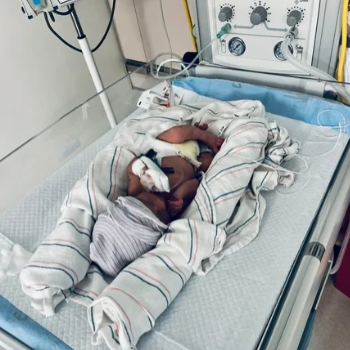
At the hospital, my pressure surged into the 180s, and an ultrasound showed intrauterine growth restriction (IUGR)—my son wasn't six pounds at all. I was induced and put on a heavy, exhausting magnesium drip. The next day, an unfamiliar doctor walked in with an apologetic nurse and broke my water without speaking to me, explaining the procedure, or asking if I was ready. It was deeply violating, and I will never forget the nurse’s quiet "I’m sorry." After a shaking epidural and twenty minutes of pushing, I held my tiny son before he was rushed to the NICU for low blood sugar.
Days after discharge, while visiting the NICU, my legs swelled severely and my pressure hit the 140s. Labor and Delivery told me to wait unless it worsened. A week postpartum, an on-call male OB shrugged off my readings as chronic hypertension, prescribed nothing, and inappropriately asked if I wanted a vaginal exam. I said no and left. Once again, my PCP intervened when my pressure hit the 160s, prescribing medication. When it stayed at 160 that night, Labor and Delivery snapped at me for checking my pressure and refused to admit me because that same violating doctor was on call. The ER took me in urgently for a second round of magnesium while my newborn lay in the NICU. It took six weeks on PCP-managed medication to stabilize.
Three years later, the trauma remains. Seeing pregnant women brings a heavy grief, knowing I can never go through pregnancy again. So many red flags were missed—PCOS, my low baseline, swelling, visual sparkles, and third-trimester vomiting. Whether I was dismissed because I am a brown woman or simply a woman whose instincts weren't trusted, mutual partnership saves lives. Preeclampsia survivors carry invisible trauma, yet we fight fiercely for our children. Trust yourself, keep advocating, and know you did not fail.
We didn't think we were going to be parents. After six years of hoping and four years of waiting to adopt, we got a...
ReadMore- Even Though I Knew There Was A Chance November 28, 2026
- How I Lost Myself To Preeclampsia November 28, 2026
- The Chance I Wish I Had November 25, 2026
- My Pregnancy Journey: the Critical Importance Of Patient Advocacy November 23, 2026
- Shayla's Story November 23, 2026
- Intersection Of Postpartum Mental Health, High Blood Pressure, and Neurological Complications November 23, 2026
- Our Preeclampsia and Hellp Syndrome Story November 23, 2026
- I Almost Ignored the Warning Signs: My Postpartum Preeclampsia Story October 29, 2026
- Divine Protection October 28, 2026
- My Baby Who I Named After My Dad October 28, 2026