
My journey with delayed onset postpartum eclampsia
March 13, 2026 By Danielle Babcock Sapienza
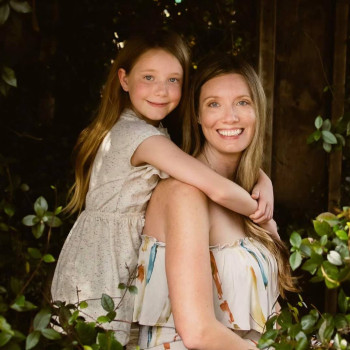
I didn’t hear the words preeclampsia or eclampsia until I had my second seizure and was on the way to the emergency room.
I wish someone had told me I was still at risk for developing preeclampsia up to six weeks postpartum. I do not remember being educated on signs and symptoms or how to take my blood pressure at home. Maybe that’s because I did not have an official preeclampsia diagnosis during my pregnancy, but I know now that is what my medical team was concerned about. But delivery did not prevent preeclampsia.
Today is Intrauterine Growth Restriction (IUGR) Awareness Day. I learned that term 13 years ago.
I was pregnant with my daughter, Leah. In the final month of my pregnancy, doctors became increasingly concerned during ultrasounds. They repeatedly told me she was small for gestational age (SGA), growing very slowly and moving very little. I had gained 10 pounds in my 37th week alone. I was gaining weight—but my baby was not.
It became clear that my baby wasn’t getting the nutrients she needed and was at risk for malnourishment. At first, my diet was questioned. One provider even joked, “You’re not really supposed to eat for two!” and suggested my nutrition might be the problem. I was embarrassed. But after taking a closer look, my medical team realized the issue wasn’t my diet at all—it was that my placenta was failing to deliver the nutrients my baby needed.
According to the Preeclampsia Foundation, 15 percent of IUGR babies born worldwide are associated with preeclampsia.
At the time I didn’t understand what preeclampsia was or the risk or correlation between it and IUGR. I was only told that my baby would thrive better outside the womb on breast milk. Up until this point, my pregnancy was pretty easy, my blood pressure was slightly elevated but considered normal, I had no protein in my urine and my blood work fine, and no well-known risk factors for preeclampsia. I didn't know that my rapid weight gain and climbing blood pressure were concerning signs for preeclampsia. Little did I know how serious this was…
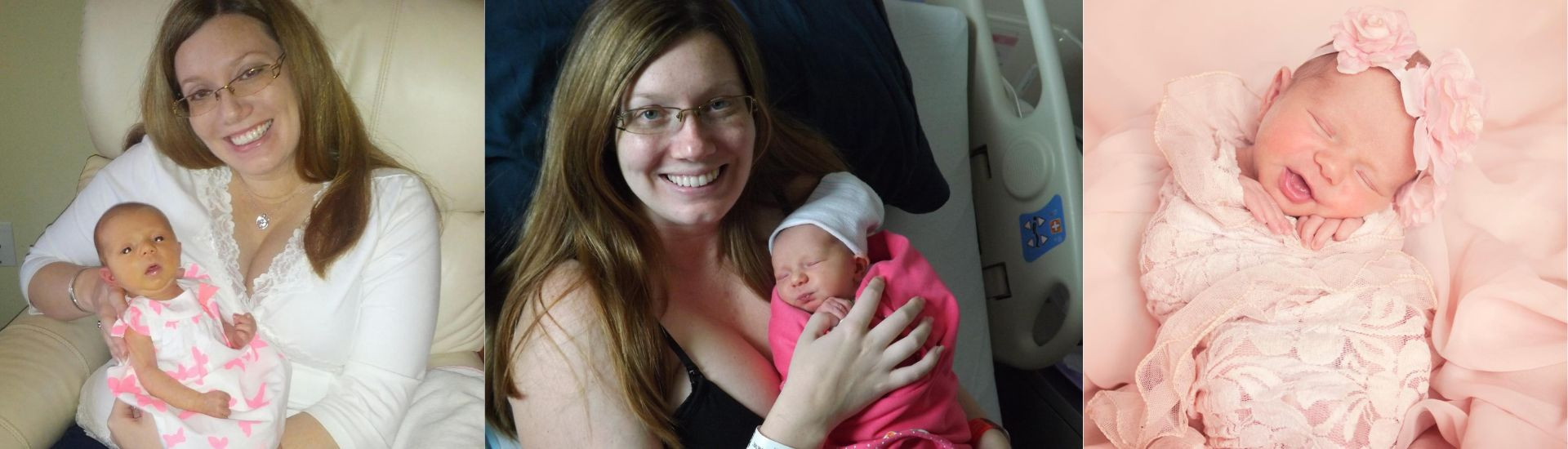
My doctor decided to induce me at 37.5 weeks. Leah was born technically full term weighing only 4 pounds 9 ounces. She was slightly jaundice and had a small hole in her heart (which thankfully closed up on its own). We also later discovered some developmental delays and hearing issues that were corrected with ear tubes. All in all, my baby was born healthy and happy.
I had a different experience.
Delivery went well, but I didn’t feel well afterward. That was to be expected. Three days after Leah was born, I was cleared to go home. Two days later, everything changed.
What started as a migraine, something I had experienced before, quickly became something far more serious. My vision blurred. My body began to swell. These were all signs of preeclampsia I did not know to look for... Then that evening I had two seizures on the bathroom floor while my then husband slept in the next room.
Disoriented, we called my OB-GYN, and he immediately told me to go to the emergency room.
The time I spent in the ER felt endless. Multiple tests were run. People were frantic. I was admitted to the neurology floor. I remembered my OB’s instructions clearly: tell them you just gave birth five days ago and that you have postpartum eclampsia. After I spoke up and my OB advocated for me, I was transferred to the mother-baby unit.
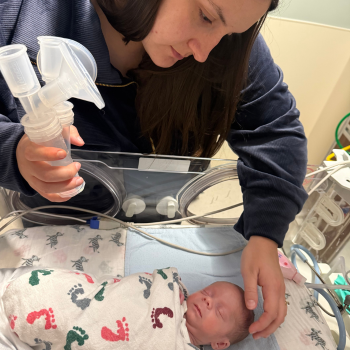
By then, my daughter was no longer considered a patient. But if a family member stayed with me, she was allowed to remain in the room. That meant I could still hold her. I could still feed her. And in the middle of one of the scariest moments of my life, I could still be her mother. The nurses even let me borrow a little bassinet and gave me diapers and other items for Leah and facilitated a referral to the pediatric cardiologist so I could focus on getting better.
While I was in the hospital, my blood pressure climbed to dangerously high levels. Doctors treated me with blood pressure medication, magnesium sulfate to prevent more seizures, blood thinners to prevent clots, and IV fluids. I felt completely helpless.
I stayed in the hospital for more than a week. I felt like I was slipping away. It’s difficult to describe, but there were moments when I felt like I might be dying. Clergy came to visit me more than once. That is something I will never forget. When you face your own mortality and are referred to as a “maternal near miss” you become grateful just to exist.
That experience changed me. It made me question whether it would ever be safe to have another child. It forced me to seek answers from medical experts, the Preeclampsia Foundation, and to learn how to advocate for my own health. And above all, it left me profoundly grateful for my life, and for the chance to be here to raise my daughter.
I didn’t have the most classic of symptoms with my preeclampsia. If I had not been in tune with my body and very cautious medically - m...
ReadMore- My Truth With Preeclampsia and Hellp Syndrome September 05, 2026
- Servere Preeclampsia At 19 Weeks September 05, 2026
- Something Wasn't Right September 05, 2026
- "Your Postpartum Preeclampsia Is Just Plain Rude" August 24, 2026
- Kirsty Roy August 24, 2026
- From Bad To Worse August 15, 2026
- My Preeclampsia Story August 15, 2026
- I Should Have Advocated More August 11, 2026
- Pppe, Hellp & DIC August 11, 2026
- Just Another Day. August 11, 2026